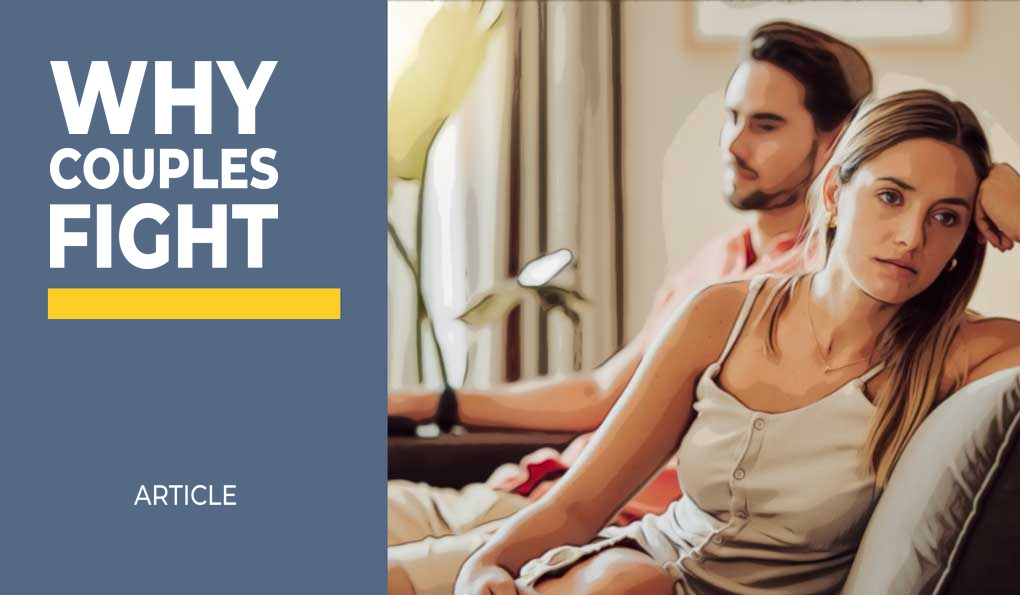
Why do couples who started out with so much love and goodwill end up in arguments and conflict? What patterns and dynamics turn a team into two people who get tangled up in blaming each other and carry more and more pain?
Everyone has had painful experiences in the course of their life. We have put some of them behind us. They fade from memory or no longer touch us. Other experiences have left their mark. When something stirs them up, we feel pain, anger, sadness, or other emotions we find unpleasant. If, for example, we have had the experience of being overlooked, we react more sensitively when we feel ignored by our partner.
There are different metaphors for these painful experiences that stay with us: open wounds, raw spots, emotional baggage, or emotional tripwires. I use the metaphor of emotional scrapes for these sensitive spots. These scrapes are highly individual. A spot of mine can hurt at the lightest touch, while the other person has grown a protective callus in the same place that can easily take a playful poke.
To understand how hurtful jabs find their way into a loving relationship, we can divide the course of a relationship, in broad strokes, into three phases. In each phase, these scrapes interact in a different way.
Phase 1: The romantic couple

The romantic couple: At first, we experience our partner as a soothing presence next to whom our scrapes fade. We value and love this person because they seem to ease our wounds, or because we forget about them in their presence, distracted by the happiness we share. We feel closeness, appreciation, and acceptance. Problems seem far away.
Phase 2: The partner is seen as the cause of the pain

Over time, we experience our partner less as someone who takes care of our scrapes and more as someone who keeps touching them. The feeling of being understood gives way to irritation that the very person who was supposed to be good for us is causing us pain. Both partners often feel like the one who is suffering, without realizing that they are caught in a painful cycle of interaction in which the pain of one triggers the pain of the other. Instead of a remedy for our wounds, our partner now seems to be the source of injustice. Inwardly, we blame them for our problems and at times feel isolated and misunderstood.
This is often the point at which couples come to therapy. There they recognize their pain cycle and learn to deal with it together.
Phase 3: The pain cycle as the common “enemy” of the relationship
 The pain cycle as the common enemy: In the third phase, each of them recognizes that the problem is the dynamic that has developed between them, and not the partner. They stop pointing fingers at each other and look together at the dynamic as the real “enemy” of the relationship. They understand the reasons for their reactions and how these set off emotional reactions in the other person that make a solution harder to reach. The goal shifts: It is no longer about changing the other person. It is about learning together how to step out of the destructive dynamic.
So the cause of conflict often lies in painful experiences that live on inside us and can be touched. Touching these emotional scrapes sets off reactions that in turn touch our partner’s wounds. Therapy helps couples find a way out of this dynamic. When couples learn to recognize and describe the dynamic, they can also find a way out on their own. The encouraging part is this: It is enough for one partner to start changing the dynamic and to find new ways of dealing with their own pain.